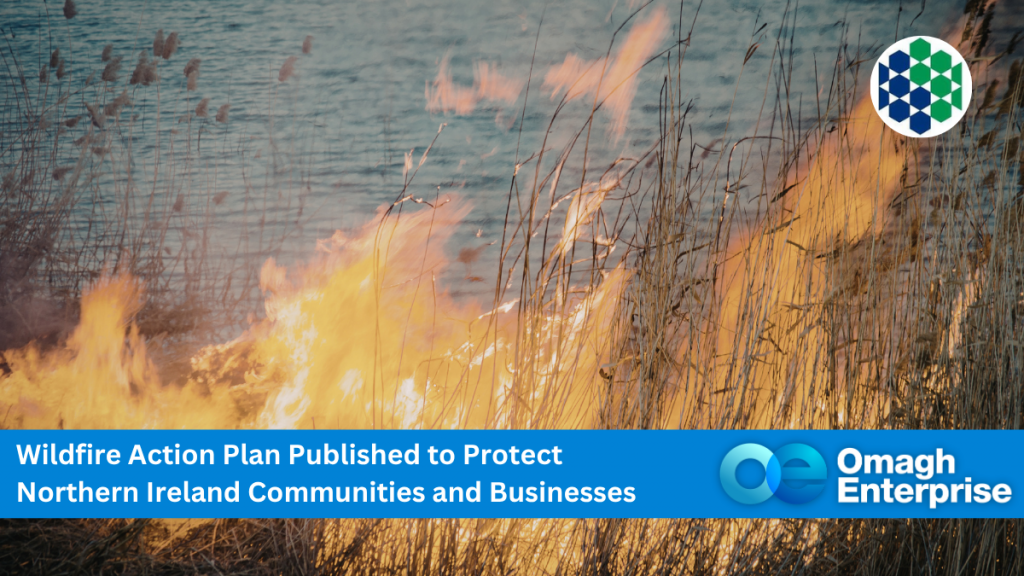
Businesses, landowners and rural communities across Omagh and the wider Fermanagh and Omagh district are being urged to take note of a new regional approach to wildfire prevention.
The Department of Agriculture, Environment and Rural Affairs (DAERA), led by Andrew Muir, has published a Wildfire Action Plan to 2030, setting out how Northern Ireland will respond to the growing risk of wildfires.
Why This Matters for Omagh Businesses
While wildfires are often associated with remote upland areas, their impact reaches far beyond.
In recent years, wildfires have:
- Disrupted rural businesses and farming activity
- Damaged natural assets that support tourism
- Posed risks to property, infrastructure and local communities
For areas like Omagh, where rural enterprise, agriculture and tourism are key parts of the local economy, increasing wildfire risk is not just an environmental issue — it’s a business one.
What the Plan Covers
The new action plan takes a multi-agency approach, bringing together partners from across Northern Ireland to strengthen how wildfires are managed.
It is built around five key priorities:
- Prevention – reducing the likelihood of fires starting
- Preparedness – ensuring systems and people are ready
- Response – improving emergency response capability
- Recovery – supporting affected areas after incidents
- Enforcement – tackling irresponsible or illegal behaviour
These priorities are supported by 35 actions aimed at improving Northern Ireland’s overall resilience.
A Coordinated Regional Response
The plan will be delivered through collaboration between agencies including the Northern Ireland Fire and Rescue Service and environmental stakeholders.
Fire services have highlighted the importance of public awareness, particularly as spring and summer approach — periods when wildfire risk increases significantly.
For local businesses and landowners, this reinforces the need to:
- Be aware of fire risks on or near their property
- Follow guidance when managing land
- Support prevention efforts where possible
New Investment in Wildfire Management
As part of the rollout, DAERA has appointed international wildfire experts from the Pau Costa Foundation to support wildfire resilience projects.
This work will focus on high-risk areas such as:
- Eastern Mournes
- North Antrim Hills
- Carn/Glenshane Pass
While these are outside the Omagh area, the learning, planning and response improvements will apply across Northern Ireland.
The Wildfire Recovery Project, expected to run for at least three years, will involve engagement with landowners, farmers and stakeholders — highlighting the importance of local input in shaping solutions.
Building Resilience for the Future
The new strategy also links closely to wider priorities including:
- Climate change adaptation
- Biodiversity protection
- Peatland restoration
For Omagh businesses, particularly those in rural sectors, this signals a continued shift towards environmental resilience as a core part of economic sustainability.
What Local Businesses Should Do Now
While the plan is regional, its success will depend on local awareness and participation.
Businesses across Omagh can:
- Stay informed on wildfire guidance and risks
- Engage with local consultations or stakeholder opportunities
- Consider how fire risk could impact operations, land or supply chains
Final Thought
Wildfires are no longer rare or isolated events. They are becoming a more regular risk that requires planning, awareness and collaboration.
This new action plan is a step towards a more coordinated response — but for places like Omagh, resilience will be built locally, through informed businesses and engaged communities.
Wildfires in Northern Ireland Strategic Framework Action Plan 2025-2030.