
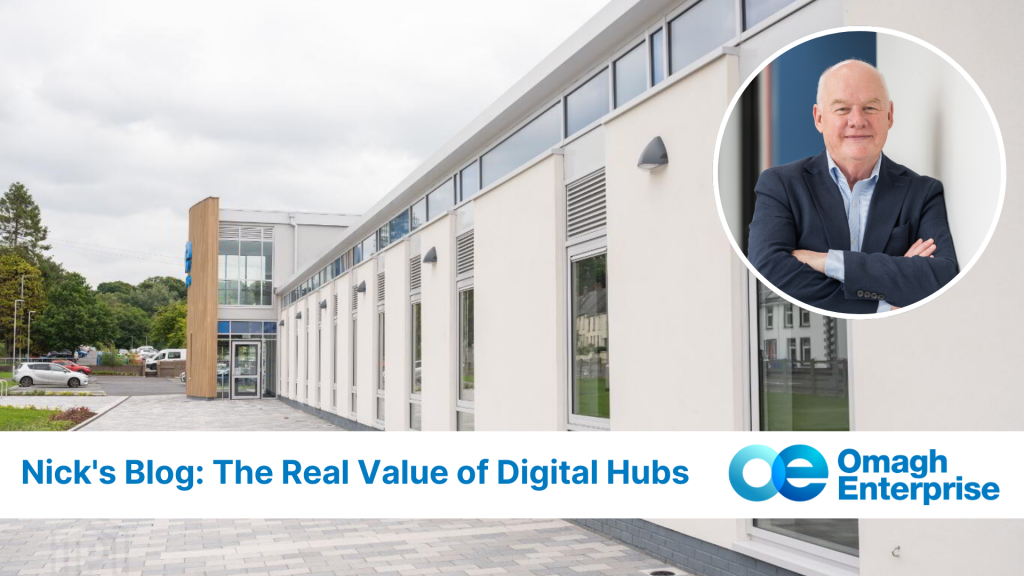
Most of the value of digital hubs comes from small businesses learning how to work better.
Startups attract attention. But most of the economic value of digital hubs comes from small businesses improving how they operate in practice. Fast-growing companies make headlines because they are visible and easy to describe. But many businesses are not trying to grow rapidly. They are trying to work better. They want better systems, better tools and clearer ways of working while staying rooted in the place where they are based. This kind of progress rarely attracts attention, but it is where most of the benefit of digital hubs is created.
The problem is not awareness. It is capacity
Most small business owners already know where their company could improve. The difficulty is not insight. The difficulty is time and space. They know they need greater digital capability, better AI tools and new skills, but the business must keep running. Customers still expect their orders on Monday morning. The work does not pause while the company improves. So change must happen along with the operation of the business. Knowing what needs to change is common. Having the time and space to change is rare. Small businesses cannot hire specialist teams to redesign how they work and they cannot step away from the business to experiment. The problem is not awareness. It is capacity.
For many companies this creates a constraint. The knowledge they need usually exists. It sits with consultants, larger companies or professional networks. But getting it takes time, money and confidence that many smaller firms do not have. When that gap grows, improvement slows. In time, that gap becomes a practical barrier to success. In many places, this is where progress is lost.
Where digital hubs make the difference
Digital hubs reduce that barrier. They do not simply provide hot-desks and broadband. They bring people, experience and practical knowledge closer together. In a digital hub, a business owner works beside someone who has already solved the problem they are facing. They see useful tools being used in real work. They hear how others approached the same challenge. Often the most useful advice comes not from a formal meeting, but from a short conversation over coffee. Knowledge moves between businesses through daily work and conversation. Learning in this environment is practical. It builds confidence as well as capability. As the problem becomes clearer, the next step becomes easier to decide.
This is different from traditional business support, which is often transactional: a workshop, a grant or a short advice session. Digital hubs work differently. They create an environment where relationships form and experience is shared through practice, not just instruction. A business does not simply receive advice. It becomes part of a place where improvement is normal, questions are expected and success is visible. In time, businesses learn how to solve problems from one another. This is how most businesses improve.
What success looks like in practice
For many small businesses, success does not mean rapid growth. It means becoming better, more efficient and more able to take on better work at higher margins. Digital hubs support this kind of progress by helping businesses introduce new tools, improve how decisions are made, learn from neighbouring companies and keep skilled people locally. The success of a digital hub should not be measured only by how many startups it produces, but by how many existing businesses become more capable, more confident and more effective in managing change. This is why digital hubs should be designed around how businesses improve, not just how startups begin. Local economies are not built only by a few exceptional companies. They are built by hundreds of businesses improving how they work year after year.
Digital hubs matter not only because they support new businesses, but because they help existing businesses work better. This is where most of the economic value lies. When businesses work better, they make better decisions. When they make better decisions, they grow more steadily. That is how strong local economies are built.